
Community Development 2024 Budget
Mission Statement and Description
To provide a “one stop shop”, partnering with citizens, developers, and contractors to build and develop a community consistent with the County’s vision of the future, while implementing building and land use services that protect and enhance life safety, health, and welfare of Mesa County and its citizens.
Mesa County's Community Development Department provides building inspection and land use planning services through the Building Inspections, On-Site Wastewater Treatment Systems, and Planning and Code Compliance programs.
Planning and Code Compliance. Planning and Code Compliance works with residents and developers to plan for and maintain orderly community development. Planning staff reviews plans for new development, ensures compliance with land use and zoning codes, and works with landowners to implement desired land uses as identified in Mesa County’s Master Plan. Code Compliance officers work with citizens, community planners, and the Health Department to ensure that properties and uses conform to the County’s land development and health codes.
Building Inspections and On-Site Wastewater Treatment Systems. Building Inspections regulates the construction, use, and occupancy of buildings through the administration and enforcement of Mesa County’s building codes in all municipalities and unincorporated areas of the County. The department reviews building plans, issues building permits for new construction, and performs inspections throughout the construction process to ensure compliance with the building codes. Mesa County’s Onsite Wastewater Treatment System (OWTS) program ensures proper disposal of onsite wastewater in areas not served by sewer services. Program staff review OWTS plans and perform inspections to ensure compliance with state and local health codes.
Support Services. Support Services is the gateway to all the services provided through Community Development, working with contractors, developers, and citizens to successfully complete the permit and clearance submission process while navigating the codes that regulate the development of the county. Support Services provides forms, instructions, information, and education for permits, planning clearances, addresses, and code compliance complaints through one on one, phone, and email contact as well as referring individuals to outside departments and jurisdictions.
2024 Goals, Objectives, and Performance Indicators
- Develop interdepartmental synergies by exploring inter-County and community opportunities to provide services and solutions to shared issues.
- Create an organizational culture that emphasizes excellence in customer service by streamlining processes and working with other departments and divisions to develop consistent and uniform application and document standards.
- Provide quality services through efficient, quick, and friendly relationships with citizens, contractors, and developers and improved efficiencies related to processing permits, applications, and complaints.
| Indicator | 2022 Actual | 2023 Projected | 2024 Target |
|---|---|---|---|
| Building permits issued | 7,193 | 6,598 | 7,000 |
| Code Cases | 367 | 377 | 400 |
| Development applications | 242 | 227 | 240 |
| Planning clearances submitted | 682 | 595 | 650 |
Budget and Staffing
Total Budget
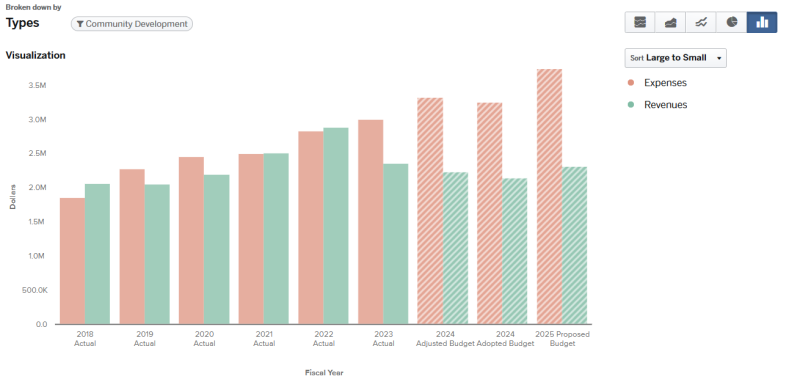
| Fiscal Year | Expenses | Revenues |
|---|---|---|
| 2018 Actual | $1,861,521 | $2,063,616 |
| 2019 Actual | $2,283,733 | $2,053,126 |
| 2020 Actual | $2,458,092 | $2,200,314 |
| 2021 Actual | $2,505,936 | $2,514,871 |
| 2022 Actual | $2,838,671 | $2,891,152 |
| 2023 Actual | $3,002,231 | $2,362,910 |
| 2024 Adjusted Budget | $3,326,649 | $2,232,022 |
| 2024 Adopted Budget | $3,252,310 | $2,146,495 |
| 2025 Proposed Budget | $3,738,036 | $2,317,022 |
Authorized Staffing Level
- 2022 Final: 11
- 2023 Amended - 2024 Adopted: 35