Help protect our agriculture from the codling moth
Photos by Utah State University
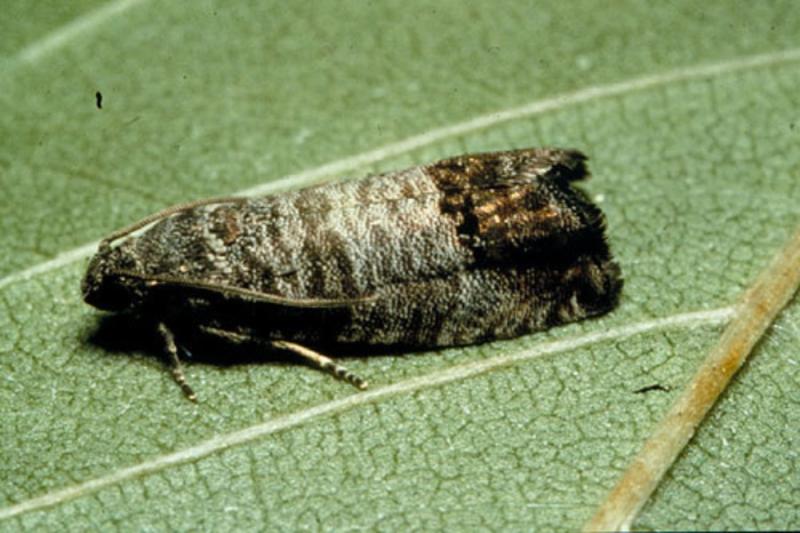
The Upper Grand Valley Pest Control District (UGVPCD), the CSU Tri-River Extension Office and Mesa County are working together to educate our community on different pests in our area to protect our local agriculture and natural surroundings from their potential harm. This month, we bring awareness to the codling moth (Cydia pomonella), a significant pest of apple and pear crops.
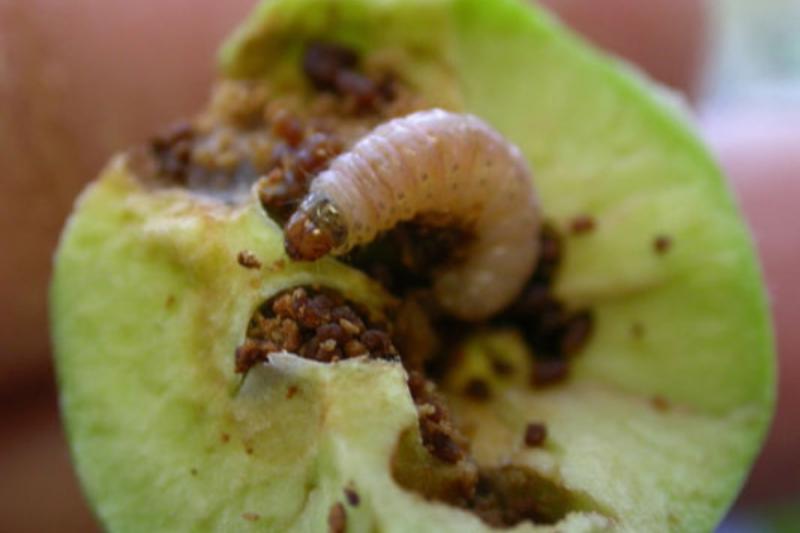
While the pest causes minimal harm to trees themselves, the larva feeds on and severely damages the fruit. Early-season feeding often appears as minor blemishes or "stings" on the fruit surface, while later-season damage results from larvae tunneling into the fruit, leading to internal breakdown and decay.
Due to their nocturnal behavior, codling moths are difficult to detect during daylight hours. Monitoring their activity is best achieved using Growing Degree Day (GDD) models and pheromone traps. Adult moths generally emerge around the time of apple bloom, with peak emergence occurring over a 6 - 7 week period after the first moths appear. Multiple generations occur each growing season.
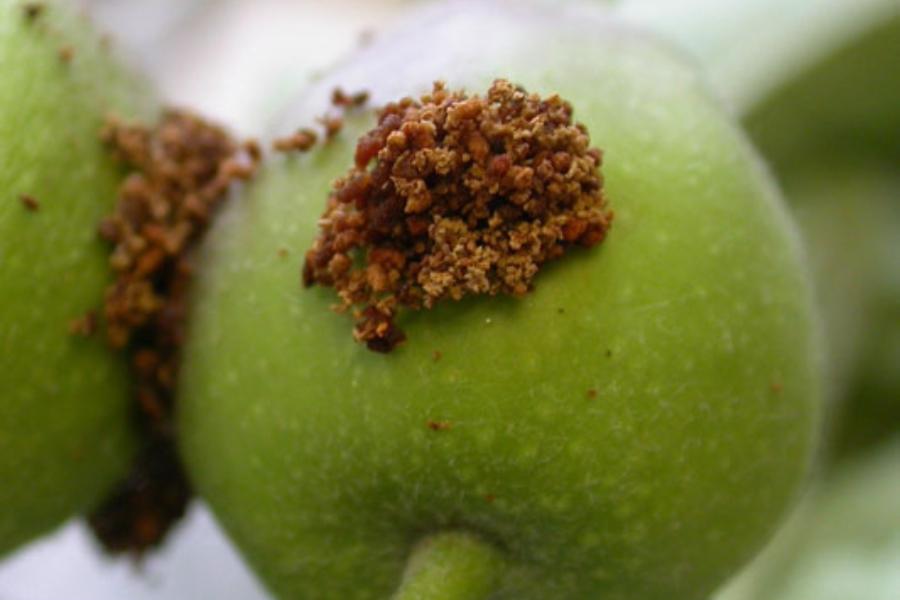
Commercial growers typically apply cover sprays at regular intervals to protect their crops. Backyard growers can use alternative strategies such as fruit thinning, trunk banding, pheromone disruption, and bagging individual fruits. To protect the agricultural industry from codling moth damage, it is essential to regularly inspect fruit for holes and frass (insect droppings). At the first sign of infestation, implement continuous treatments using insecticides, biological controls, or non-chemical methods to prevent further damage.
For more detailed guidance on codling moth prevention and control, please refer to the CSU Extension codling moth factsheet on their website.