Plants Japanese beetles love — and how residents can help protect Mesa County
Mesa County continues working to eradicate the invasive Japanese beetle, a pest that can damage hundreds of plants found in home landscapes, gardens and agricultural crops.
Japanese beetles were first detected in north Grand Junction in 2022. Since then, Mesa County and its partners have worked to monitor and treat affected areas to prevent the insect from becoming permanently established in the Grand Valley.
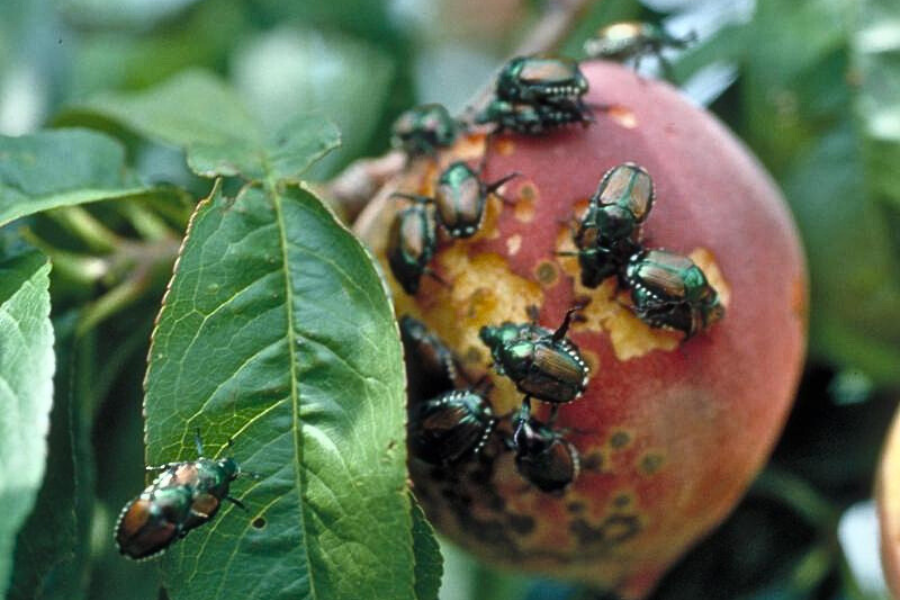
Adult beetles feed on more than 300 types of plants, including many common garden and landscape species such as roses, grapes, fruit trees, sunflowers and raspberries. They damage plants by feeding on leaf tissue between veins, leaving a skeleton-like appearance.
The beetle’s larvae — white grubs that live in soil — feed on grass roots in lawns and turf areas.
Choosing plants that are less attractive
Some plants are naturally more resistant to Japanese beetle feeding and may be better options for landscaping in areas where beetles have been detected.
Examples include lilac, juniper, red maple, spruce, pine, columbine, begonia, hosta and stonecrop.
A full list of plants Japanese beetles commonly damage — and those they tend to avoid — is available on the Mesa County website.
Why eradication matters
Japanese beetles can cause significant damage to landscapes, gardens and agriculture once they become established. Eradication and continued monitoring help prevent long-term impacts to the community.
Mesa County launched its Japanese Beetle Eradication Program in 2022 and offers free treatments to consenting properties in affected areas. These efforts help protect landscaping, public green spaces and Mesa County’s agricultural sector, which generates more than $58 million in crop income each year.
Questions or suspected beetles
Residents who believe they have found Japanese beetles or grubs can contact the program for assistance. Can email jb@mesacounty.us or call 970-902-3886.