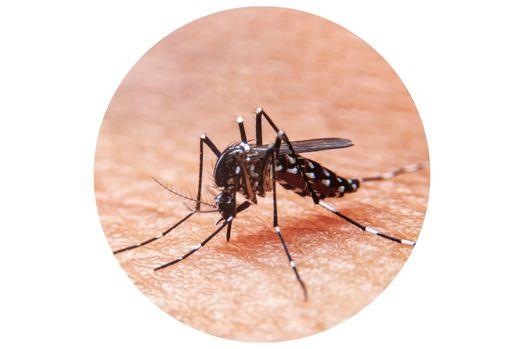
Mosquito season is here, take action to stay healthy
As part of National Mosquito Awareness Week, Mesa County Public Health (MCPH) encourages residents to protect themselves from mosquito bites. Preventing bites is essential to reducing the risk of West Nile virus, which is transmitted to humans through the bite of an infected mosquito.
"With summer about to get underway, now is the time to focus on prevention. You can take easy and effective steps to reduce your chances of being bitten by mosquitoes, helping protect both yourself and your loved ones from West Nile virus. Since there's no specific cure for the virus, prevention remains the best defense,” said Kathleen Satterfield, Epidemiologist Supervisor.
Prevention
These simple steps limit your risk for mosquito bites while spending time outside:
- Use an EPA-approved insect repellent effective against mosquitoes. Look for one that contains DEET, Picaridin, IR3535, 2-undecanone, or oil of lemon eucalyptus. Visit the EPA website for more information about repellents.
- Dress in long sleeves and pants when in areas where mosquitoes are active.
- Avoid being outdoors at dusk and dawn; this is when mosquitoes are most active.
- Drain and remove sources of standing water on your property.
- Installing and repairing screens on windows and doors, or using air conditioning if available.
Talk to a health care provider if you develop a fever with severe headaches or confusion.
West Nile virus background
West Nile virus season runs from May through October, with most cases reported in late summer when mosquitoes are most active, primarily in August and September. Most people who are infected with West Nile virus do not get sick. In fact, about 75-80% of cases are asymptomatic. For those who do experience symptoms, they can range from mild flu-like illness to severe encephalitis, which is inflammation of the brain. People who are over the age of 50 are at the highest risk for severe illness.
“Many people infected with West Nile virus may not realize it, as symptoms are often mild or even nonexistent — things like a low-grade fever or headache,” said Satterfield. “But for older adults or individuals with weakened immune systems, the virus can cause severe and potentially life-threatening complications.
MCPH works closely with the Grand River Mosquito Control District (GRMCD) to keep the community safe during mosquito season. While MCPH tracks the human cases of West Nile virus, GRMCD monitors and treats mosquito populations.
Visit the MCPH website to learn more about West Nile virus trends over the last five years in Mesa County.
Media Inquiries, contact:
Sarah Gray
Public Health
Communication and Marketing Manager
970-697-4611